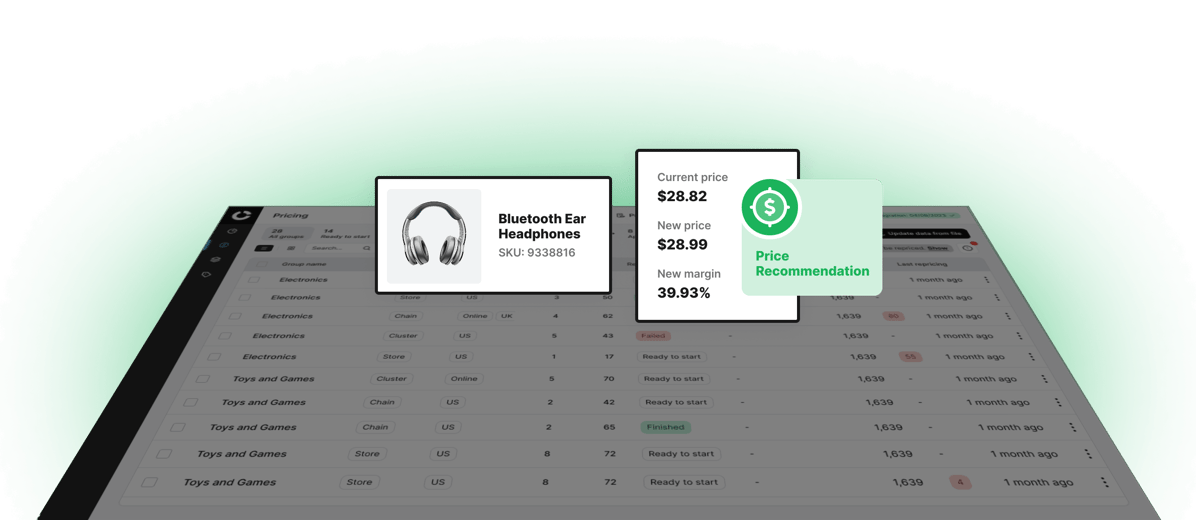



For pricing and category teams, TPO is the difference between running promotions because they are on the calendar and choosing promotions because the numbers support them.
This guide explains what trade promotion optimization is, how it differs from trade promotion management, and how AI can manage hundreds of promotions at once.
Key takeaways
- Trade promotion optimization (TPO) is the process of planning, modeling, and measuring promotions to maximize revenue and margin impact, instead of repeating last year's calendar by default.
- A structured optimization process follows six steps: define objectives, segment SKUs, model scenarios, align with base pricing, execute and monitor, and measure post-promotion performance.
- AI-driven trade promotion optimization replaces spreadsheet-based planning with demand-driven scenario modeling, letting pricing teams predict promotional outcomes before committing a budget.
What is trade promotion optimization?
Trade promotion optimization is the process of planning, modeling, and measuring promotions to maximize revenue and margin impact. It answers the questions that matter before a campaign launches: which products to promote, how deep to discount, when to run the offer, and which channels to use. These decisions are based on performance data and demand modeling, not intuition or last year's calendar.
For retailers, TPO spans temporary price reductions, multi-buy offers, category-level promotions, loyalty-linked discounts, and event-driven campaigns. All of these interact with each other and with base promotional pricing strategy. A temporary price reduction on a category anchor product affects basket composition, adjacent category sales, and customer traffic patterns simultaneously. Optimizing any single promotion in isolation misses those interactions.
For large retailers, the impact shows up quickly in margin. According to Nielsen's global trade promotion analysis, 59% of trade promotions did not break even. In the United States, McKinsey reported that figure reached 72%. When category margins sit in the low single digits, every unoptimized promotion is a direct hit to profit.
Trade promotion optimization vs. trade promotion management: what’s the difference?
Trade promotion management (TPM) handles the execution. It covers the operational logistics, resource allocation, and performance tracking of active promotions.
Trade promotion optimization manages predictive planning. It analyzes historical data and tests different scenarios to determine which promotions will drive the best results before you launch them.
TPO comes before TPM. One forecasts the outcome. The other gets the campaign to the shelf. Without TPO, TPM executes promotions that may not have been worth running. Without TPM, TPO produces recommendations that never reach the customer.
For a broader view, explore our resources on AI pricing and the future of promotional pricing optimization.
Why trade promotion optimization matters for enterprise retailers
Enterprise retailers run hundreds of campaigns at once. Without a system to predict outcomes, those promotions often reduce margins, cannibalize adjacent products, and train customers to wait for discounts. Trade promotion optimization prevents these failures before they happen.
- Protects margins from wasted discounts. TPO identifies which promotions generate incremental volume and which ones subsidize purchases that would have happened at full price. You stop giving away margin on products customers already planned to buy.
- Predicts cross-product cannibalization. A discount on one product can suppress demand for adjacent items or pull forward future purchases. TPO models these interactions so a lift on one SKU does not come at the expense of total category performance.
- Prevents reactive price wars. Instead of matching competitor discounts by reflex, TPO calculates the financial outcome of a proposed response. You only deploy price moves that protect margin.
- Connects promotions to base pricing. TPO shows how promotional discounts interact with everyday prices, markdown schedules, and price elasticity. Your promotional calendar works with your pricing strategy, not against it.
- Protects price credibility. By controlling the frequency and depth of discounts, TPO prevents the cycle where customers learn to wait for sales. Your full-price items hold their perceived value.
What trade promotion optimization delivers in practice: a retail example
A vendor offers promotional funding to discount a premium coffee brand. Here is how that two-week promotion plays out with and without optimization.
Without TPO: repeating last year's playbook
The team sets a 25% discount because that is what they ran last year. They schedule it during the same fortnight as a private-label coffee campaign already locked into the category plan.
The premium coffee cannibalizes the private-label range. Shoppers shift from the higher-margin store brand to the discounted premium product.
The result: Vendor funding covers the premium coffee markdown but does not cover the lost private-label margin. Total category profit drops. The team only sees the full picture during a post-promotion review three weeks later.
With TPO: modeling the outcome first
The pricing team runs the proposed campaign through Competera's retail promotion optimization software. The system models the demand impact and flags the cannibalization risk before the promotion goes live.
The team adjusts: a shallower discount on the premium coffee, scheduled one week after the private-label promotion ends rather than running alongside it.
The result: Both promotions generate incremental volume without cannibalizing each other. Net category profit increases. The retailer maintains everyday price credibility on both products.
The trade promotion optimization process: six steps
Trade promotion optimization works by modeling the exact financial outcome of a campaign before you launch it. You achieve this by shifting from historical guesswork to predictive planning across these six steps.
1. Define objectives and constraints
Start with what you want the promotion to achieve. Are you driving trial, defending share, clearing seasonal stock, or growing basket size? That goal determines how deep you discount and what metric defines success.
Next, lock in your constraints: vendor funding terms, margin floors, inventory limits, and pricing rules. Without these, campaigns chase volume while giving away the margin that justified them.
2. Segment SKUs by promotional sensitivity
Use Key Value Items (KVI) pricing analysis to identify highly price-sensitive products that drive traffic. Separate these from staple items where discounts simply give away margin without creating new demand. This ensures you promote the right items, not just the ones with vendor funding.
3. Model scenarios before committing
Stop copying last year's calendar. Run pricing simulations to test different discount depths, timing windows, product combinations, and mechanics (like a flat discount versus a multi-buy). The model forecasts the exact revenue lift, margin impact, and cannibalization effects for the individual SKU and the overall category.
4. Align with your base pricing strategy
Promotions are not isolated events. Discounting a product that recently had its everyday base price reduced creates a compounding margin hit. You must account for base prices, recent price changes, and competitive positioning so your promotions do not contradict your everyday prices or your broader discount pricing strategy.
5. Execute and monitor in real time
Once a promotion is live, track actual performance against the model's predictions. Are units moving as expected? Is cannibalization within the forecasted range? Are inventory levels holding up? Real-time visibility lets you adjust mid-campaign rather than waiting for a post-mortem to spot failures.
6. Measure post-promotion performance and capture learnings
Post-promotion analysis compares actual outcomes against the pre-promotion model. What was the true incremental lift versus baseline? What was the cannibalization effect on adjacent products? Did the promotion generate new customers or just shift existing purchase timing? Every post-promotion result should update the models that plan the next one. Tracking pricing metrics at this stage is what separates teams that improve over time from teams that repeat the same guesses.
Common trade promotion optimization mistakes that enterprise retailers make
Enterprise retailers fail at optimization when they let historical habits and internal silos override predictive data. These are the five mistakes that come up most often.
Copying last year's calendar
The most common mistake is treating last year's promotional calendar as this year's starting point. Market conditions, competitive dynamics, customer behavior, and cost structures change. A promotion that generated positive ROI two years ago may be margin-negative today because a competitor now runs a deeper discount in the same week, or because input costs have shifted the breakeven point.
Evaluating promotions in isolation
Judging a single campaign’s success ignores how it interacts with the rest of your assortment. A promotion might look profitable on its own, but actually cannibalize sales from a higher-margin product in the same category. You must optimize at the portfolio level, not the campaign level.
Letting vendor funding dictate discounts
Letting vendor funding dictate your promotion plan leads to discount depths that serve the vendor's goals, not yours. Discount depth should come from price sensitivity, demand elasticity, and competitive positioning. Build your case with demand forecasting first, then negotiate vendor terms around a strategy the data already supports.
Ignoring post-promotion dips
Promotional lifts that are followed by sales dips in the weeks after the promotion ends indicate demand pull-forward, not incremental volume. If the promotion simply shifted when customers bought the product rather than whether they bought it, the net effect on revenue may be zero or negative once the post-promotion dip is accounted for.
Separating promotion planning from pricing decisions
A pricing team may be raising base prices to protect margin while the promotion team simultaneously offers discounts that undercut the new price point. You need shared data and tools to keep promotional pricing aligned with base prices.
Best practices and KPIs for trade promotion optimization
To get the highest return on your promotional spend, you need precise metrics. The following best practices keep your strategy proactive, while the right KPIs tell you if a campaign is profitable.
Best practices for trade promotion optimization
-
Model before you commit. Test every promotion through scenario modeling before scheduling it. Compare at least two alternative scenarios against a no-promotion baseline.
-
Measure incrementality, not total lift. A promotion that generates strong sales but minimal truly incremental volume has a very different ROI than the headline number suggests.
-
Set guardrails. Define minimum margin thresholds, maximum discount depths, and promotional frequency limits by category. Guardrails prevent the promotional escalation that leads to margin erosion and price wars.
-
Integrate promotion and pricing data. The team planning promotions needs visibility into base pricing, competitive pricing, and markdown schedules. Disconnected planning produces contradictory outcomes.
-
Build a feedback loop. Every post-promotion analysis should update the models used for future planning. Promotion effectiveness improves when each cycle's learnings inform the next.
Key KPIs for measuring trade promotion performance
-
Incremental revenue. The additional revenue generated by the promotion above what would have occurred without it. Isolates the true promotional contribution from baseline sales.
-
Promotional ROI. Net profit generated by the promotion divided by total promotional cost (including margin reduction, marketing spend, and operational costs). The single most important metric for determining whether a promotion was worth running.
-
Sales lift percentage. The percentage increase in unit sales during the promotional period compared to baseline. Measures demand response to the promotional mechanic and discount depth.
-
Cannibalization rate. The percentage of promotional sales that came at the expense of other products in the same or adjacent categories. High cannibalization reduces or eliminates the net benefit of the promotion.
-
Post-promotion dip. The percentage decline in sales in the weeks following the promotion compared to baseline. A large dip indicates demand pull-forward rather than incremental demand creation.
-
Margin impact. The change in gross margin at SKU, category, and total portfolio level during and after the promotion. Captures whether the promotion generated profitable growth or subsidized volume at a loss.
-
Basket impact. The change in average basket size and composition during the promotional period. Promotions that increase total basket value deliver more value than those that shift spending within the basket.
-
Promotional frequency ratio. The percentage of time a product spends on promotion versus full price. Products promoted too frequently train customers to wait for discounts, eroding both price perception and margin.
How Competera's AI-driven pricing solutions improve trade promotion optimization at scale
Manual planning forces your pricing team to guess outcomes by testing just two or three scenarios against historical averages. Competera’s AI-driven pricing solutions remove these limits. Our platform models the exact financial impact of thousands of promotional variables at once by analyzing granular transaction data and demand elasticity. Pricing teams will know the exact ROI before a campaign goes live.
Instead of treating promotions as isolated events, Competera gives you a single, unified system to manage your entire pricing lifecycle.
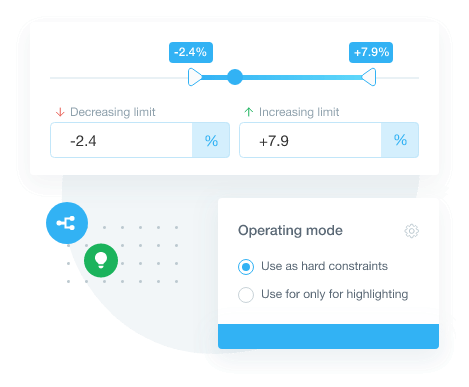
With Competera's Pricing Platform and dedicated Promo Management solution, you can:
- Run simulations: Test different discount depths, timing windows, and product combinations to find the most profitable scenario before execution.
- Visualize impact: Calculate exact promotional ROI at both the SKU and category levels. Instantly view true incremental uplifts, cannibalization risks, and surplus stock.
- Unify pricing and promotions: Connect your promotional calendar directly to base prices and markdown schedules so your campaigns don’t contradict everyday pricing strategy.
Recognized in the Gartner Market Guide for Retail Unified Price, Promotion, and Markdown Optimization, Competera AI-driven pricing software automates the scenario modeling while your team makes the final pricing decisions.
Talk to an expert to see how Competera connects pricing and promotions into a single system.

References
- Nielsen. (2015, May 28). Nielsen launches game-changing trade promotion analysis and visualization [Press release]. Nielsen.
- McKinsey & Company. (2019). How analytics can drive growth in consumer-packaged-goods trade promotions. McKinsey & Company.